


Copaiba Oil & Endocannabinoid System: THC, BCP and CBD explained
- Oct 21, 2017
- 7 min read
So basically, every human has an Endocannabinoid system. Whether you want one or not! And you’re probably going to draw a link between THC and cannabanoils, but you will have missed out on some amazing potential for healing of other plants, that affect the same receptors in the brain without the “psychotropic – off your face” affects.
So what is a cannabinoid? There are 3 classes: endocannabinoids, phytocannabinoids and synthetic cannabinoids.
Now whether you’re aware, synthetic cannabinoids are found in certain pharmaceuticals which help with appetite stimulation, glaucoma, antiemetic and other diseases. Endocannabinoids, on the other hand, are produced naturally by the body. These molecules are mainly composed of amines and amides. Phytocannabinoids are molecules that are produced by plants such as Cannabis and Copaifera
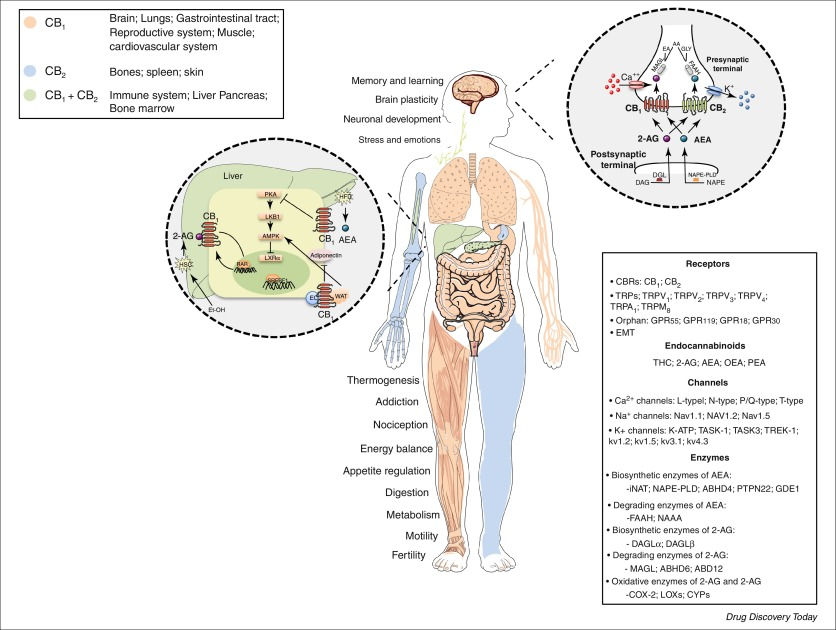
We all have a Endocannabinoid System (EC) which helps the human body to manage inflammation, anxiety, and responses to stress such as skin irritations, migraines and many others disease. When this occurs in your body, we all produce compounds called endocannabinoids. A cannabinoid is a molecule or group of molecules that acts on either or both of the Cannabinoid Receptors. The cannabinoid receptors in the brain are triggered by the Endocannabinoild system and once again to clarify we ALL have this system.
The Ecannabinoid system is activated, by the production of molecules such as Anandime. Anandamine switches on the Cannabinoid Receptor 1 (CB1) and Cannabinoid Receptor 2 (CB2). These 2 receptors produce very different physiological responses when activated.
The easiest way to demonstrate how the ecannabaniod system works in our bodies and brain – is in an Athlete. After an extreme exertion by an Athlete, there is generally stress on the body and its organs. The body produces Anandamine to activate the Cannabinoid Receptors and switch on the EC system. The Athlete CB1 and CB2 receptors are switched on allowing for a slight euphoria and soothing the discomfort in their body.
The CB1 receptor is found in the brain and central nervous system and is common linked to pleasure and pain pathways. This is what causes that euphoric feeling. When THC and other similar cannabinoids activate the CB1 this mostly results in a psychoactive drug high.
The CB2 receptors are found all over the body, in organs, the skin, muscles to name a few. CB2 activation from BCP results show promising therapeutic effects on the entire body without the psychoactive side effects associated with other cannabinoids. Interestingly CB2 are found on the surface of white blood cells and it the activation affects the regulation of inflammation chemicals such as cytokines.
This EC system helps an Athlete with pain management by producing a mild europhic state and inflammation, pain is reduced because of the production of cytokines.
Now THC (tetrahydrocannabinol) is a psychotropic compound found in Marijuana. THC also activates both the CB1 and CB2, though THC can have powerful psychotropic affects on the brain and body. CBD (Cannabidiol) is another compound found in high quantities of Marijuana, which uses a different method to affect the Cannabinoid receptors, but the interaction is so minimal (Beaumont). Unfortunately studies have shown that CBD (found in Marijuana) actually effects an enzyme which breaks down the Anandamine. So to reiterate the Anandamine activates the CB1 and CB2 receptors so if these enzymes are broken down by CBD then an individual such as an Athlete will not have the higher levels of anandamide which increase feelings of euphoria (activation CB1) or the soothing of pain and tissue (CB2).
J. Gertsch et al. (2008) explains that BCP is a dietary cannabinoid. BCP (Beta-caryophyllene) is a sesquiterpene compound found in many plants, and has the unique ability to interact with the CB2 receptor. CB2 receptors are found in blood cells so inadvertently BCP still affects areas where the blood travels trough such as the brain, lungs, heart, etc. So therefore benefits of CBD or THC can be achieved without the psychotropic effects by using BCP. Copaiba Oil has the highest concentration of BCP than any oil. If you search the internet, there are many testimonials of it being used for Autoimmune Disease such as Parkison, Lupus to name a few and has been used for individuals with Austism, various Learning Difficulties. There are individuals who use it for scars, skin irritations and those who use it as a neural depressive for its calming and anti-anxiety properties as well as its links to Pain relief, Seizure treatment, Diabetes prevention (lowers insulin) though further studies need to be completed.
Copiaba oil contains a much higher active biochemical amount of BCP (60%) than CBD (hemp oil) products (2-30%). BCP is also found in lower amounts in other essential oils like Melissa and black pepper, so you could simply use these oils if your uncomfortable with sustained use of Copaiba.
Copaiba Oil is the alternative to cannabis, it is legal and doesn't have the negative psychological effects.

Some of the research that links to possible uses:
“Nevertheless, in recent years, several studies suggested a broad spectrum of Copaiba Oil effects in nonneural tissues, including anti-inflammatory and antinociceptive [17–19], cytotoxic and anticancerous [20], antimicrobial [21], wound healing, and antiulcer [18] activities.”
Except from paper - Copaiba Oil-Resin Treatment Is Neuroprotective and Reduces Neutrophil Recruitment and Microglia Activation after Motor Cortex Excitotoxic Injury 2012 (reference below 17,18,19,20).
“Acne - In a double-blind clinical trial, it was found that copaiba oil (as part of a natrozol gel) significantly reduced the surface area of skin covered by acne (acne vulgaris specifically, which is mild acne) when applied twice a day for 21 days. The mechanism is believed to be β-caryophyllene, which has been shown to have an anti-inflammatory effect. (Da Silvia, 2012)
Skin Cancer and Tumours - Sylvia R. M. Lima et. al. in 2003, it was found that oral administration of copaiba oil resin to mice decreased lung tumor size and number of nodules. The resin was administered every two days after the mice were induced with tumors. The mechanism of this is thought to be the cytotoxicity of the resin to the cancer cells (it was shown to reduce cell viability of melanoma cells when incubated together in the lab). Note: Copaifera multijuga was used. (Lima et al, 2003).
Autoimmune Disease - 2014 publication in Molecules, a group reports that copaiba oil (Copaifera Officialis) inhibits certain proteins and complexes involved in the inflammation response. In doing so, it can effectively modulate the acute (as opposed to chronic) inflammatory response. Copaiba oil was also found to inhibit cytokines (basically signaling proteins) which play an essential role in autoimmune disorders (Dias et al , 2014). In 2012, Guimarães-Santos (et al) particular study explored the effect of copaiba oil on rats after induced damage to the central nervous system. They found that the copaiba oil reduced tissue damage and was neuroprotective, although they admit that the mechanism is still largely unknown, aside from the reduction of neutrophils at the site. Reducing the neutrophils reduces the inflammatory response.
Antimicrobial - In 2008, a Adriana dos Santos (et al) tested several varieties of copaiba oil (Copaifera martii, Copaifera officinalis, and Copaifera reticulata) against common bacteria. They were found to be most effective against gram positive bacteria (such as strep and staph), and moderately effective against dermatophyte fungi. The group proposes that the copaiba oil is bactericidal because it lyses (cuts) the cell wall of the bacteria, causing its death.
Wound Healing - Paiva et al (2002) tested copaiba resin (Copaifera langsdorffii) as a wound healing accelerant. They also found the tensile strength of the healing wounds to be greatly improved.”
Exerpts above from http://theessentialgirl.com/copaiba-oil-just-facts/
Car accident, Stroke & Brain Damage – Kristi Thom, Copaiba Oil
https://www.youtube.com/watch?v=JzR270y6Rb8 Pain, Digestion and Lungs
Cannabaniod explained Dr Hill - https://www.youtube.com/watch?v=puHV3Asn7fY
Reference, Research and Further Reading:
Paiva, L. A. F., de Alencar Cunha, K. M., Santos, F. A., Gramosa, N. V., Silveira, E. R. and Rao, V. S. N. (2002), Investigation on the wound healing activity of oleo-resin from Copaifera langsdorffi in rats. Phytother. Res., 16: 737–739. doi: 10.1002/ptr.1049
Adriana Oliveira dos Santos; Tânia Ueda-Nakamura; Benedito Prado Dias Filho; Valdir F Veiga Junior; Angelo C Pinto; Celso Vatapu Nakamura. Antimicrobial activity of Brazilian copaiba oils obtained from different species of the Copaifera genus. Mem. Inst. Oswaldo Cruz vol.103 no.3 Rio de Janeiro May 2008 Epub Apr 30, 2008.
Débora S. Dias, Lívia B. A. Fontes, Antônio E. M. Crotti, Beatriz J. V. Aarestrup, Fernando M. Aarestrup, Ademar A. da Silva Filho, and José O. A. Corrêa. Copaiba Oil Suppresses Inflammatory Cytokines in Splenocytes of C57Bl/6 Mice Induced with Experimental Autoimmune Encephalomyelitis (EAE). Molecules. 2014, 19(8), 12814-12826.
S.R. Lima, V.F. Junior, H.B. Christo, A.C. Pinto, P.D. Fernandez. In vivo and in vitro studies on the anticancer activity of Copaifera multijuga Hayne and its fractions. Phytother. Res., 17 (2003), pp. 1048–1053
17. Kobayashi C, Fontanive TO, Enzweiler BG, et al. Pharmacological evaluation of Copaifera multijuga oil in rats. Pharmaceutical Biology. 2011;49(3):306–313. [PubMed]
18. Paiva LAF, Gurgel LA, De Sousa ET, et al. Protective effect of Copaifera langsdorffii oleo-resin against acetic acid-induced colitis in rats. Journal of Ethnopharmacology. 2004;93(1):51–56. [PubMed]
19. Veiga VF, Rosas EC, Carvalho MV, Henriques MGMO, Pinto AC. Chemical composition and anti-inflammatory activity of copaiba oils from Copaifera cearensis Huber ex Ducke, Copaifera reticulata Ducke and Copaifera multijuga Hayne—a comparative study. Journal of Ethnopharmacology. 2007;112(2):248–254. [PubMed]
20. Gomes NDM, Rezende CDM, Fontes SP, et al. Antineoplasic activity of Copaifera multijuga oil and fractions against ascitic and solid Ehrlich tumor. Journal of Ethnopharmacology. 2008;119(1):179–184.[PubMed]
da Silva AG, Puziol Pde F, Leitao RN, Gomes TR, Scherer R, Martins ML, Cavalcanti AS, Cavalcanti LC. Application of the essential oil from copaiba (Copaifera langsdori Desf.) for acne vulgaris: a double-blind, placebo-controlled clinical trial. Altern. Med. Rev. March 2012. 17(1):69-75.
Chemical composition and anti-inflammatory activity of copaiba oils from Copaifera cearensis Huber ex Ducke, Copaifera reticulata Ducke and Copaifera multijuga Hayne--a comparative study.
Veiga Junior VF, Rosas EC, Carvalho MV, Henriques MG, Pinto AC
J Ethnopharmacol. 2007 Jun 13; 112(2):248-54.
https://www.doterra.com/US/en/blog/science-safety-physiology-endocannabinoids-explained
https://www.doterra.com/US/en/blog/science-safety-physiology-a-chemists-perspective
Image Tree: Balsam Copaiba Copaifera officinalis
Image Endocannabinoid System: Targeting the endocannabinoid system: future therapeutic strategies, Oier Aizpurua-Olaizola1, Izaskun Elezgarai2, Irantzu Rico-Barrio2, Iratxe Zarandona1, Nestor Etxebarria1, Aresatz Usobiaga1
These statements have not been evaluated by the Food and Drug Administration. This product is not intended to diagnose, treat, cure, or prevent disease. The information supplied above is from studies, research completed by others referenced. I am not a doctor nor a medical professional, though if you have any questions on use please speak with the relevant professional.


Comments